Bangladesh’s Sustainable Textile Revolution: From Mass Production to Green Innovation
Bangladesh has emerged as one of the most influential players in the global sustainable textile movement, transforming its readymade garment and textile sector from a volume-driven industry into a more responsible, innovation-focused ecosystem. Over the past decade, the country has steadily invested in green factories, cleaner production systems, and ethical manufacturing practices, positioning itself as a strong competitor in the global apparel supply chain.
Growth of Green Factories and Global Recognition
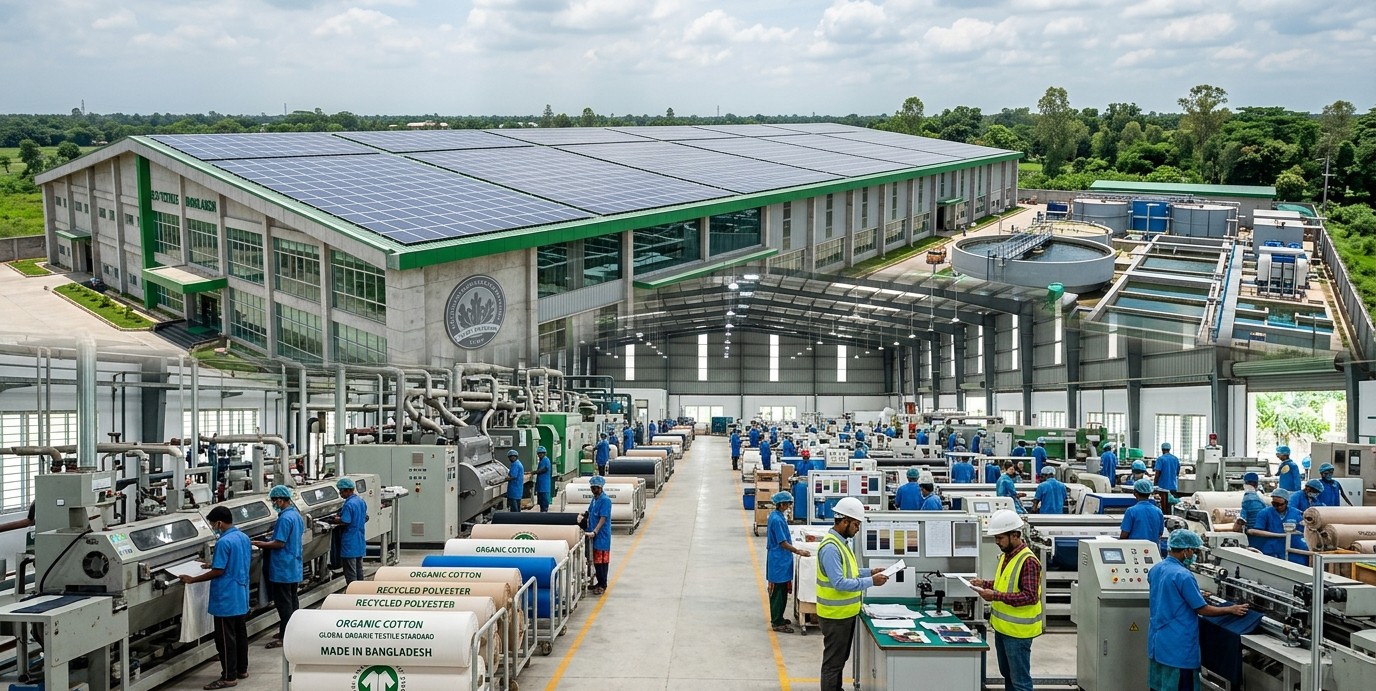
One of the most significant achievements is the rapid growth of LEED-certified green factories. Bangladesh now has one of the highest numbers of environmentally certified garment factories in the world, many of which are designed to reduce energy consumption, optimize water usage, and improve worker safety. These factories are not only meeting international compliance standards but also setting new benchmarks for sustainable production efficiency.
Advancements in Water Management Systems
Water management has become a key focus area in the industry. Textile mills and dyeing units are increasingly adopting advanced effluent treatment plants (ETPs), water recycling systems, and low-liquor ratio dyeing technologies. These improvements are helping reduce environmental impact while ensuring compliance with stricter global regulations from major apparel buyers.
Shift Toward Eco-Friendly Materials
At the same time, the use of eco-friendly materials is growing. Organic cotton, recycled polyester, low-impact dyes, and sustainable fiber blends are becoming more common in production lines. Many exporters are actively collaborating with global brands that prioritize sustainability commitments, especially in Europe and North America.
Energy Efficiency and Renewable Integration
Energy efficiency is another area where Bangladesh is making strong progress. Solar power integration, energy-efficient machinery, and improved factory designs are helping reduce carbon footprints while lowering long-term production costs. Several large factories are now operating partially or fully on renewable energy systems.
Skills Development and Industry Awareness
Beyond infrastructure, awareness among factory owners, managers, and workers has also improved significantly. Training programs, compliance audits, and international partnerships are encouraging a culture of responsibility and continuous improvement across the sector.
Sustainability as a Global Competitive Advantage
Experts believe that sustainability is no longer optional for the textile industry—it is a competitive requirement. Bangladesh’s early investment in green transformation is now paying off, helping the country secure long-term orders from global brands that are shifting toward responsible sourcing.
Conclusion: A Leader in Sustainable Textile Manufacturing
With continued innovation, policy support, and industry collaboration, Bangladesh is positioning itself not just as a manufacturing hub, but as a leader in the global sustainable textile revolution.