Artificial Intelligence in the Textile Industry: Driving the Future of Smart Manufacturing
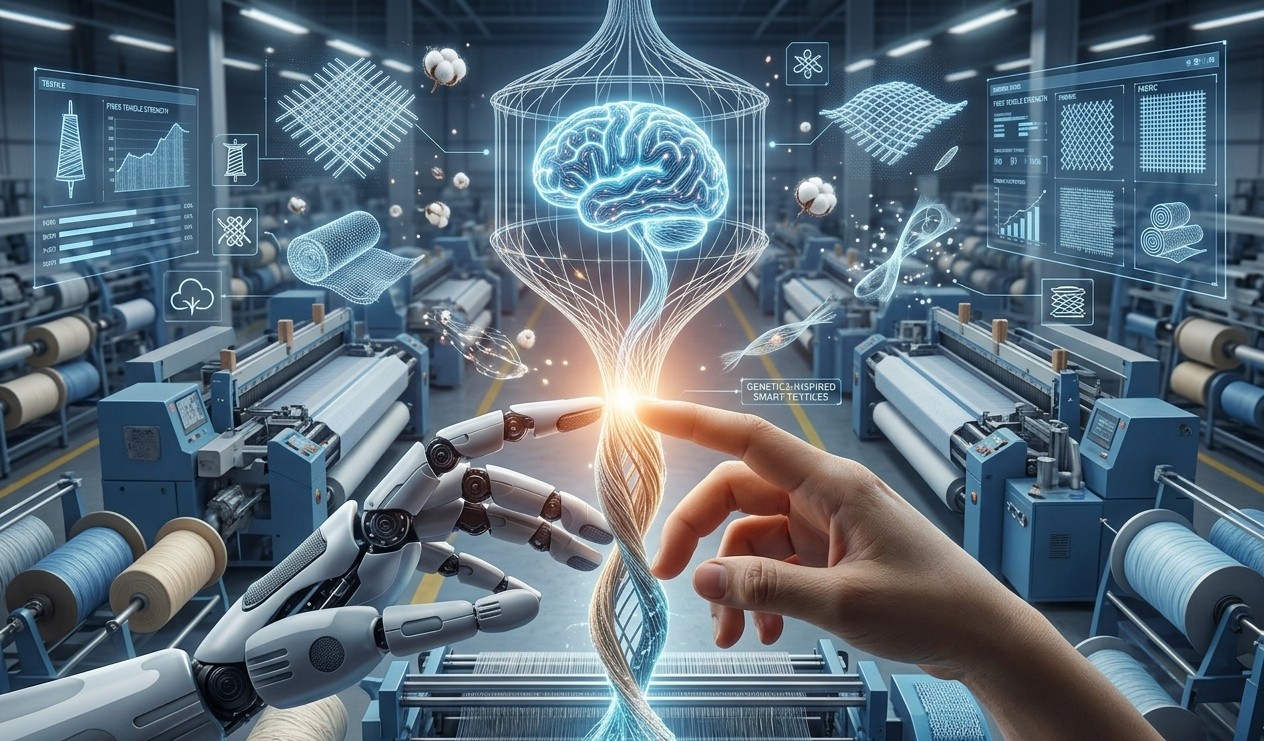
Artificial intelligence is rapidly reshaping the global textile industry and creating a new era of smart manufacturing. What once depended heavily on manual observation, repetitive labor, and slow decision-making is now being upgraded through intelligent systems that can analyze data, predict problems, and automate complex processes. From spinning mills to garment finishing units, AI is becoming one of the most powerful tools for improving productivity, reducing waste, and increasing competitiveness in textile manufacturing.
AI in Quality Control and Fabric Inspection
One of the biggest applications of AI in textiles is quality control. Traditionally, fabric inspection required human workers to manually identify defects such as holes, stains, color variation, weaving faults, or printing errors. This process was time-consuming and sometimes inaccurate due to fatigue or human limitations.
Today, AI-powered cameras and computer vision systems can inspect fabric continuously with high precision. These systems can instantly detect even minor defects, classify the issue, and alert operators in real time. As a result, factories can maintain better quality standards while reducing rejection rates and customer complaints.
Demand Forecasting and Production Planning
Another major area where AI is making a strong impact is demand forecasting and production planning. Textile and apparel markets often change quickly based on fashion trends, seasons, and consumer behavior. Predicting demand incorrectly can lead to overproduction or stock shortages.
AI systems analyze historical sales data, buyer trends, market signals, and seasonal patterns to forecast future demand more accurately. This helps manufacturers plan raw material purchases, machine schedules, workforce allocation, and delivery commitments with greater confidence.
Predictive Maintenance in Textile Machinery
Predictive maintenance is also transforming factory operations. In many textile mills, machine breakdowns cause serious production delays and financial losses. AI can monitor machine vibration, temperature, speed, and operating performance through sensors.
By analyzing these patterns, the system can predict when a machine is likely to fail before an actual breakdown occurs. This allows maintenance teams to repair equipment in advance, reduce downtime, and extend machine lifespan. For spinning, weaving, knitting, dyeing, and finishing units, this creates smoother operations and higher efficiency.
AI in Supply Chain Optimization
AI is also improving supply chain management, which is one of the most critical parts of the textile business. Textile supply chains involve cotton suppliers, yarn producers, fabric mills, dyeing units, garment factories, logistics providers, and global buyers. Delays at any stage can affect final delivery.
AI tools help track inventory levels, optimize warehouse movement, recommend best shipping routes, and identify possible disruptions before they happen. This creates faster communication, lower costs, and stronger on-time delivery performance.
Energy Efficiency and Sustainability Benefits
In the area of energy efficiency and sustainability, AI offers huge potential. Textile factories consume large amounts of water, electricity, steam, and chemicals. AI systems can optimize dyeing temperatures, water usage, chemical dosage, and energy loads based on real-time production needs.
This not only reduces operating costs but also supports environmental goals. As international buyers increasingly demand greener production, AI adoption can help factories meet sustainability standards more effectively.
Impact on Workforce and Skills
For workers and management, AI does not simply replace people—it changes how people work. Employees can move from repetitive tasks to higher-value roles such as monitoring systems, analyzing reports, managing automation, and improving production strategies.
This means the future workforce in textiles will need stronger digital skills, technical knowledge, and problem-solving ability.
Opportunities for Countries Like Bangladesh
Countries like Bangladesh, China, Vietnam, Turkey, and India can gain significant advantages by adopting AI-driven textile manufacturing. For Bangladesh especially, where the textile and garment sector is a major economic pillar, AI can help factories move beyond low-cost production and become leaders in speed, quality, compliance, and innovation.
Conclusion: The Future Smart Textile Factory
The future textile factory will be smarter, faster, cleaner, and more connected. Machines will communicate with each other, production lines will adjust automatically, defects will be detected instantly, and decisions will be guided by real-time data.
Artificial intelligence is no longer a distant concept—it is becoming the new foundation of modern textile manufacturing.